01
Overview
From ingredients to meals—powered by AI
Role
Product Designer
Timeline
2 months
Platform
Mobile App
Key Outcome
AI-powered meal planning
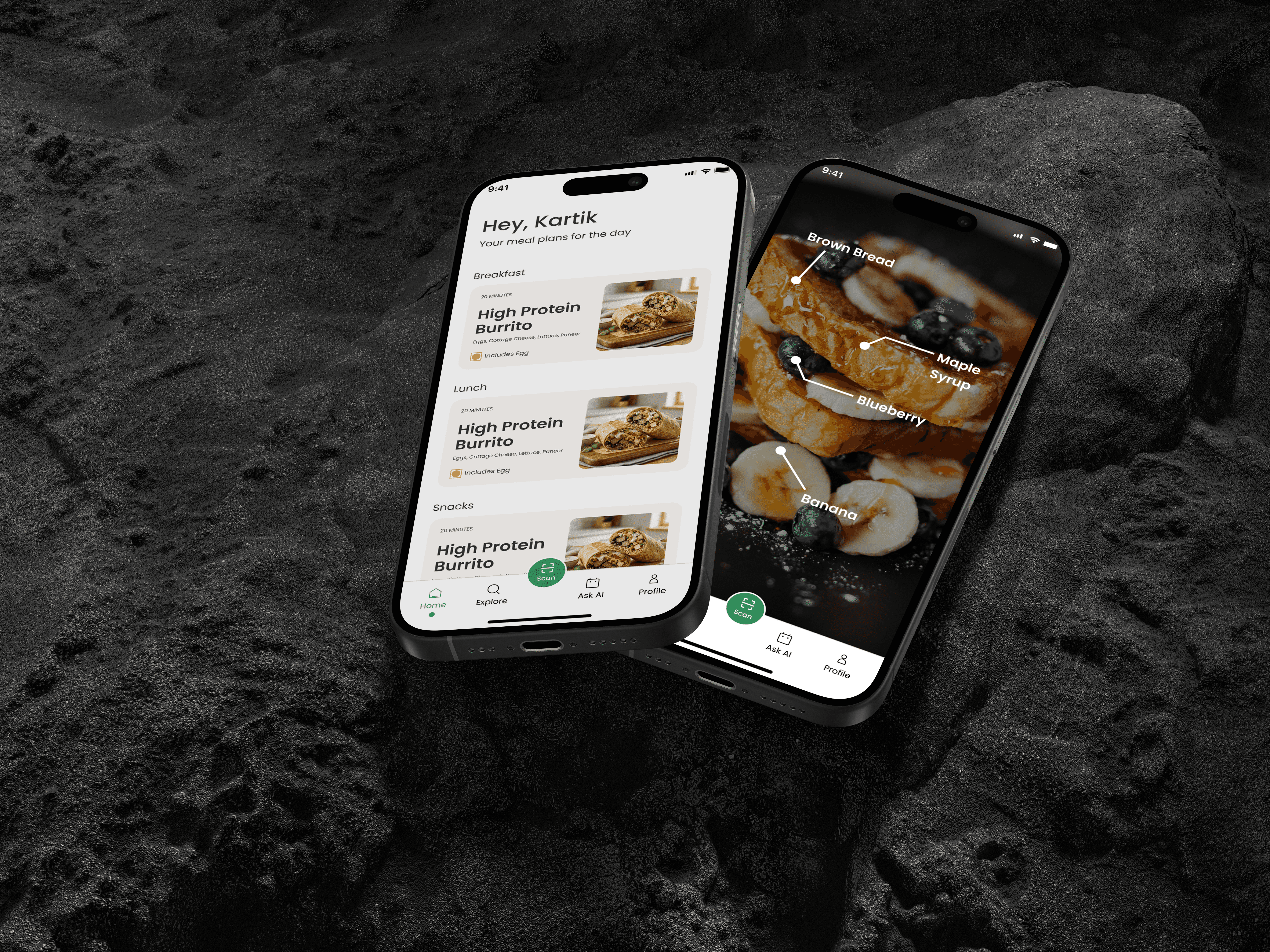
For Flaverly, I designed a consumer cooking experience centered around helping people decide what to cook, how to use what they already have, and how to prepare meals more efficiently. My role covered the product experience from concept and information architecture through interaction design and visual UI.
Turn the everyday friction of “What should I cook?” into a personalized experience that makes meal planning feel simple, useful, and enjoyable.
02
The Problem
01
02
03
04
Insight 1
Users spend too much time deciding what to cook, often leading to frustration and unhealthy choices.
Insight 2
Many users waste groceries because they struggle to use available ingredients efficiently.

Insight 3
Fitness-focused users find calorie tracking and meal planning difficult to maintain consistently.
Insight 4

68% of users said they would cook more often if meal planning felt faster and simpler.
03
The Challenge
04
The Solution
Before
After
Add / register their voice
Authenticate using their voice
Remove their voice
Demonstrate
Simplify
Extend
05
Projected Product Impact

Projected users in the first year

Weekly planning engagement

Projected user satisfaction

Meal-plan completion
From helping users decide what to cook to becoming their everyday nutrition companion.
05
User Persona / Target Audience

Income: ₹1,20,000/month
Age: 28 years old
Location: Pune, Maharashtra
Marital Status: Engaged
Occupation: Network Security
Education: Undergraduate
Lifestyle: Busy, Sedantry

Income: ₹15,000/month
Age: 20 years old
Location: Goa
Marital Status: Single
Occupation: Student
Education: Underway
Lifestyle: Gym Goer, Free Time
An AI-First Cooking Experience
Traditional meal-planning apps make users browse recipes and decide what to cook themselves.
Flaverly shifts the experience toward AI-assisted decision making, helping users discover meals based on what they have, what they need, and how they want to eat.
Design Decision
The AI Meal Generator became a primary product interaction rather than a secondary feature.
Users can provide:
Available ingredients
Calorie target
Budget
Dietary preference
Cooking time
Feature #1
Design Decision
The Fridge Scanner allows users to capture their available ingredients instead of manually entering them one by one.
Those ingredients then become the foundation for AI-generated recommendations.
The interaction loop
Scan → Recognize → Recommend → Cook
Cook with what you already have.
One of the biggest barriers to meal planning is knowing what ingredients are already sitting in the fridge.
Flaverly turns the fridge into the starting point for meal discovery.
Feature #2
07
Brand Identity & Design System
Building a system that could scale with the product.
Rather than designing every screen independently, a reusable design system established the foundations for the entire product.
